
Flexible Workspace Solutions for Modern Offices
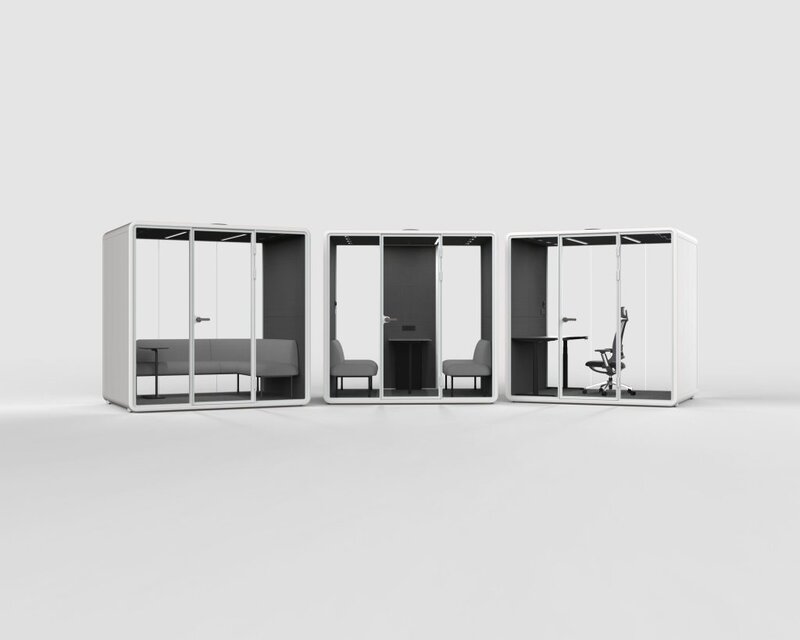
Flexible workspace solutions have become a priority for organizations navigating hybrid work, fluctuating headcount, and uncertain long-term office needs. Traditional office layouts and permanent construction often lack the adaptability required to respond to rapid change.
By using flexible workspace solutions, companies can support collaboration, privacy, and focus while avoiding long buildout timelines and irreversible investments.
What Are Flexible Workspace Solutions?
Flexible workspace solutions refer to office layouts, systems, and products that can be reconfigured, scaled, or relocated as needs evolve. Rather than committing to fixed walls and long-term tenant improvements, organizations adopt solutions designed for change.
These solutions prioritize speed of deployment, modularity, and reversibility—key advantages in today’s dynamic work environments.
Common Types of Flexible Workspace Solutions
Modular Office Pods
Modular office pods are one of the most effective flexible workspace solutions available today. Pods provide enclosed, private spaces for calls, meetings, and focused work without permanent construction.
Companies exploring office pods can review modular options here:
office pods
Pods can be installed quickly and relocated as teams grow or office layouts change.
Phone Booths and Focus Pods
Phone booths and focus pods offer single-user privacy in open offices. While useful for short calls, many organizations eventually supplement booths with larger modular pods to support longer meetings and collaborative use.
This layered approach improves flexibility without increasing construction costs.
Demountable Walls and Partitions
Demountable wall systems allow offices to reconfigure space without traditional drywall construction. However, these systems still require permitting, installation time, and may be difficult to reuse across locations.
Compared to modular pods, demountable walls often provide less flexibility over the long term.
Why Flexible Workspace Solutions Matter
Work patterns no longer fit static office designs. Teams expand and contract, departments reorganize, and collaboration styles evolve.
According to research from McKinsey on the future of work:
https://www.mckinsey.com/featured-insights/future-of-work
organizations that design for flexibility are better positioned to adapt to uncertainty and reduce operational risk.
Flexible workspace solutions allow companies to respond quickly without costly renovations.
Cost Considerations for Flexible Workspace Solutions
While upfront costs vary, flexible workspace solutions often reduce total cost over time by minimizing downtime, avoiding repeated construction, and preserving asset value.
CBRE workplace insights highlight that flexibility reduces long-term occupancy costs and disruption:
https://www.cbre.com/insights
Evaluating cost per year of effective use provides a clearer comparison than initial price alone.
Flexibility vs Permanent Construction
Permanent construction locks organizations into layouts that may no longer serve them within a few years. Flexible workspace solutions reduce this risk by allowing space to evolve alongside business needs.
For companies seeking adaptability without ownership risk, leasing office pods offers a practical deployment model:
https://theclaritycastle.com/leasing/
Leasing shifts workspace decisions from long-term commitments to manageable operating expenses.
Scalability and Speed
One of the strongest advantages of flexible workspace solutions is speed. Modular systems can often be deployed in days rather than months.
This speed enables companies to pilot layouts, test new workflows, and respond to growth without interrupting operations.
How to Choose the Right Flexible Workspace Solution
When evaluating flexible workspace solutions, organizations should consider:
Speed of deployment
Ability to relocate or scale
Acoustic and privacy performance
Comfort for extended use
Compatibility with future office plans
Solutions that balance flexibility with performance typically deliver the greatest long-term value.
Conclusion
Flexible workspace solutions allow modern offices to adapt without sacrificing productivity or committing to permanent construction. By prioritizing modularity, speed, and reversibility, organizations can create work environments that evolve alongside their teams.
As work continues to change, flexibility is no longer optional—it is a strategic advantage.