
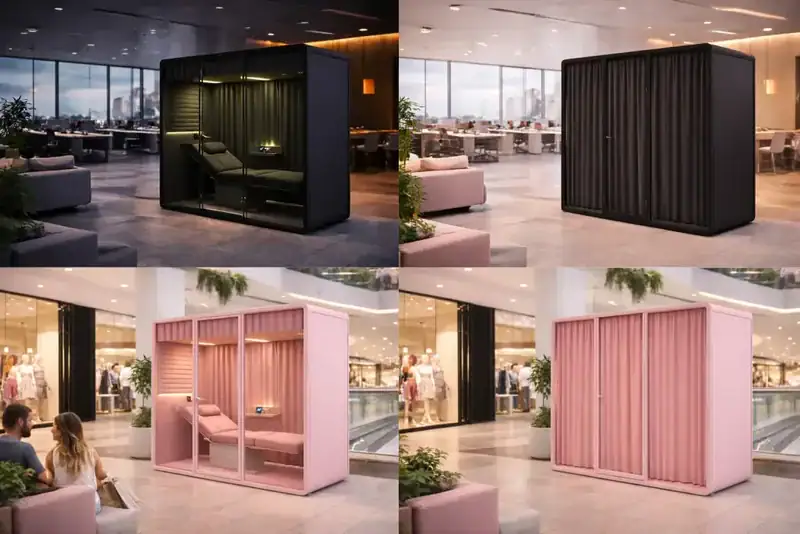
Workplace Nap Pods — Why Rest Is Becoming Part of Workplace Design
I love naps. Most people do.
And if we’re honest, many people already take them — just not always in ideal places.
At home, it’s easy.
At work, not so much.
That’s why workplace nap pods are starting to show up in offices, coworking spaces, universities, manufacturing facilities, and public environments. Not as a gimmick, but as a practical response to how people actually work today.
If you want to see a real example of modular private rest pods designed for workplaces, you can explore them here:
The Cocoon | Private Rest Pods by ClarityCastle
The Workplace Has Changed. Expectations Have Too.
Remote work shifted expectations.
People proved they could:
Work productively from different environments
Manage their energy better
Take short breaks when needed
Maintain performance outside traditional offices
Now many employers are encouraging teams back into shared spaces. Collaboration benefits everyone, but people still value flexibility.
That’s one reason workplace nap pods are gaining attention — they help bridge that gap.
If you’re specifically exploring nap pods designed for offices, this page focuses on that use case:
Nap Pods for Offices | Why Workplaces Are Adding Rest Pods
Fatigue Is More Expensive Than Most Companies Realize
Fatigue impacts:
Focus
Creativity
Safety
Decision-making
Overall wellbeing
CDC sleep guidance consistently highlights how insufficient sleep affects performance and health:
https://www.cdc.gov/sleep/about_sleep/how_much_sleep.html
NIH research connects quality sleep with cognitive function and mental health:
https://newsinhealth.nih.gov/2021/04/good-sleep-good-health
Short rest periods don’t replace sleep, but they can help people reset during demanding days.
That’s where workplace nap pods come into the conversation.
This Isn’t About Sleeping All Day
Some people assume nap pods encourage laziness.
In reality, most usage looks like:
15–20 minute recharge
Quiet mental reset
Brief decompression between tasks
Short recovery during long shifts
When used appropriately, workplace nap pods support productivity rather than reduce it.
Workplace Design Is Becoming Human-Centered
Workplace design used to focus primarily on efficiency.
Now it increasingly focuses on:
Experience
Comfort
Flexibility
Wellbeing
That’s why we see:
Phone booths
Wellness rooms
Flexible seating zones
Better acoustics
Lighting improvements
Nap pods fit naturally into that evolution.
Offices Are Just One Part of the Story
Interest in rest pods isn’t limited to offices.
Hotels, airports, retail environments, universities, and public venues are exploring similar solutions.
If you want to see how sleep pods work across broader commercial environments, this page covers that perspective:
Sleep Pods for Commercial Spaces | The Next Workplace & Hospitality Upgrade
Construction vs Modular Solutions
Traditional quiet rooms usually require:
Renovation
Permits
Budget allocation
Permanent layouts
Modular pods:
Install quickly
Move when layouts change
Avoid construction disruption
Reduce long-term waste
That flexibility is why workplace nap pods are gaining traction.
Employee Experience and Retention
Workplace expectations have shifted.
Employees increasingly evaluate environments based on:
Flexibility
Comfort
Wellness support
Overall experience
Providing thoughtful infrastructure often matters more than flashy perks.
Workplace nap pods fall into that category — practical rather than performative.
Safety Considerations in Industrial Settings
Fatigue affects more than productivity.
In manufacturing, logistics, healthcare, and industrial environments, fatigue can impact:
Reaction time
Safety awareness
Operational consistency
Providing a structured place to rest can support safety initiatives.
That’s another reason workplace nap pods extend beyond traditional offices.
FAQ — Workplace Nap Pods
Do workplace nap pods improve productivity?
Short rest breaks can improve alertness, mood, and focus. Many organizations see them as part of broader wellbeing strategies.
Are employees comfortable using them?
When introduced thoughtfully, they tend to feel normal rather than unusual — similar to phone booths or quiet rooms.
Are workplace nap pods expensive?
Compared to construction projects, modular pods often reduce total cost because they install quickly and avoid structural changes.
Are they hygienic?
Commercial pods use easy-clean materials and simple cleaning protocols, similar to shared office spaces.
Are they completely soundproof?
No pod is completely soundproof, but acoustic design significantly reduces surrounding noise.
Where are they usually installed?
Common placements include:
Quiet zones
Wellness rooms
Office lounges
Manufacturing break areas
Hospitality environments
Placement depends on workflow and space layout.
Are workplace nap pods just a trend?
Probably not. As workplaces prioritize wellbeing and flexibility, rest infrastructure is becoming more mainstream.
The Bottom Line
Workplaces aren’t just about desks anymore.
They’re about energy, focus, creativity, and sustainable performance.
Workplace nap pods aren’t indulgent.
They’re practical.
And increasingly, they’re part of how modern environments support people.
If you want to explore how modular private rest pods work in real settings, you can start here:
The Cocoon | Private Rest Pods by ClarityCastle