
Sleep Pods for Commercial Spaces — Why Demand Is Growing

Most people don’t need convincing that rest matters.
They already know.
What’s changing is where people expect to find it.
More businesses are exploring sleep pods for commercial spaces because people spend longer hours away from home — working, traveling, studying, shopping, attending events, or waiting between connections.
And fatigue doesn’t disappear just because you’re in public.
It’s Not Just Offices Anymore
Offices started the conversation, but demand is spreading quickly to:
Hotels and hospitality spaces
Airports and transportation hubs
Universities and campuses
Retail and malls
Event centers and convention venues
Manufacturing and industrial workplaces
Government buildings
Anywhere people spend extended time becomes a candidate for rest infrastructure.
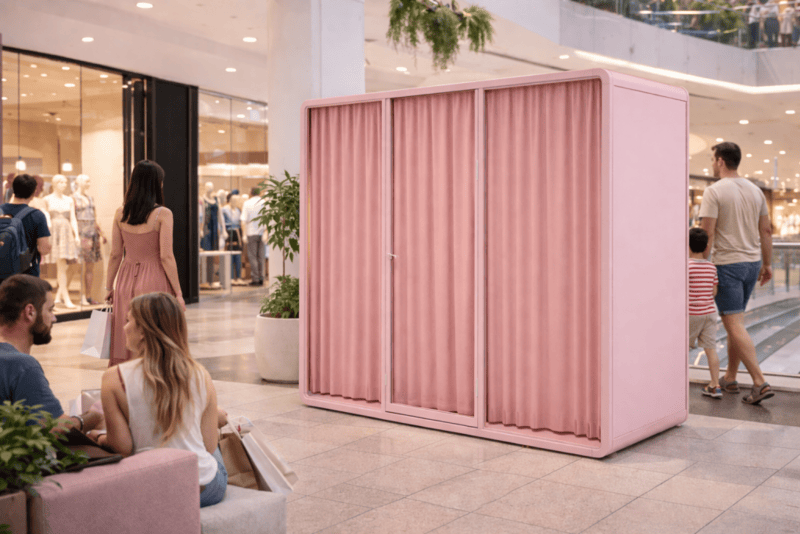
That’s why modular sleep pods for commercial spaces are gaining attention.
The Shift Toward Human-Centered Environments
Businesses are realizing something simple:
Comfort improves experience.
And experience affects:
Customer satisfaction
Employee retention
Productivity
Brand perception
It’s the same reason companies invest in:
Better lighting
Acoustic design
Comfortable furniture
Wellness programs
Rest spaces are just the next logical step.
Construction Isn’t Always the Answer
Traditional solutions usually mean:
Building quiet rooms
Renovating unused areas
Creating permanent layouts
That takes time, permits, money, and often future demolition.
Modular pods change that.
They install quickly, move easily, and avoid construction disruption.
If you want to see how modular rest pods actually look in practice, this page shows a real example:
The Cocoon | Private Rest Pods by ClarityCastle
Hospitality Is Leading Adoption
Hotels, airports, and mixed-use developments are early adopters because:
Travel fatigue is universal.
Guests appreciate privacy.
Premium amenities justify pricing.
Providing sleep pods for commercial spaces can improve:
Guest satisfaction
Customer dwell time
Perceived value
Competitive differentiation
And unlike lounges or large wellness rooms, pods don’t require major floorplan changes.
Workplace Spillover Effect
As employers introduce nap pods for offices, people begin expecting similar amenities elsewhere.
That expectation transfers to:
Hotels
Airports
Universities
Public venues
Comfort becomes normalized.
Businesses that anticipate this shift tend to lead, not follow.
Sustainability Angle (Often Overlooked)
Permanent construction generates:
Material waste
Demolition cycles
Long-term inflexibility
Modular rest pods reduce that impact by:
Remaining reusable
Adapting to new layouts
Minimizing renovation waste
That fits well with modern ESG and sustainability goals.
FAQ — Sleep Pods for Commercial Spaces
Are sleep pods only for offices?
No. Offices started the trend, but hospitality, retail, transportation, universities, and industrial environments are adopting them quickly.
Do customers actually use them?
Yes. Travelers, shoppers, employees, and event attendees all experience fatigue. When a private rest option exists, usage tends to follow.
Are they expensive to install?
Compared to traditional construction, modular pods are usually faster and more cost-effective because they avoid major renovations.
Do they require permanent space?
Not necessarily. One advantage of sleep pods for commercial spaces is flexibility. They can often be relocated if needs change.
Are they hygienic for public use?
Commercial pods are designed for easy cleaning, durable materials, and turnover between users, similar to meeting rooms or lounge spaces.
Are they soundproof?
No pod is completely soundproof, but acoustic design significantly reduces external noise and helps create a calm environment.
The Bottom Line
People are spending more time outside their homes than ever.
Work, travel, events, education, shopping — it all adds up.
Providing a place to rest isn’t a luxury anymore.
It’s becoming part of how thoughtful spaces operate.
That’s why interest in sleep pods for commercial spaces keeps growing.
And it’s only getting started.
If you want to explore what modular private rest pods look like in real environments, you can see them here:
The Cocoon | Private Rest Pods by ClarityCastle