
In the fast-paced world of commercial real estate development, the drive towards sustainability has become a cornerstone in shaping the future of office constructions. As businesses become increasingly aware of their environmental footprint, the focus has shifted towards building practices that not only reduce costs but also minimize environmental impact. One of the major sources of environmental concern in the construction industry is the use of traditional drywall, which contributes significantly to construction waste and has considerable environmental repercussions.
The Environmental Impact of Drywall
Drywall, composed primarily of gypsum plaster pressed between thick sheets of paper, is used universally in the interiors of commercial buildings. While it is prized for its ease of installation and cost-effectiveness, the environmental cost of using drywall is high. According to the Environmental Protection Agency (EPA), construction and demolition (C&D) materials account for about 600 million tons of waste annually in the United States, with drywall waste constituting a significant portion of this EPA Report on C&D.
A significant environmental issue with drywall is its disposal. When disposed of in landfills, gypsum can create hydrogen sulfide gas, a toxic substance that poses serious health risks. Moreover, the production of drywall is energy-intensive, contributing to carbon emissions and exacerbating global warming.
The Cost of Conventional Construction Methods
The traditional construction methods involving drywall are not only environmentally unsustainable but also economically and temporally demanding. The Building and Construction Authority (BCA) reports that traditional building methods take an average of 30% longer to complete compared to more modern, sustainable methods.

This not only affects the project timelines but also significantly increases labor and management costs.
Furthermore, the financial impact of waste management must be considered. The Construction & Demolition Recycling Association highlights that the cost of landfilling waste materials is rising, as is the cost of construction materials themselves. By reducing waste, companies can significantly cut project costs .
Sustainable Alternatives: A Greener Path Forward
In response to these challenges, the industry is turning to innovative, sustainable construction alternatives. One such alternative is modular construction, where buildings or parts of buildings are constructed off-site in a controlled factory setting. This method drastically reduces waste, as materials can be more precisely ordered and used.
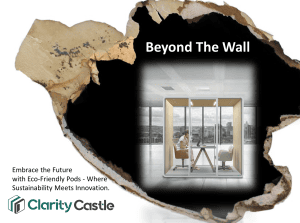
Companies like ClarityCastle are leading the charge by offering soundproof office pods that eschew traditional drywall for more sustainable materials. These pods are not only quicker to install, reducing labor and time costs, but are also fully recyclable and customizable, offering businesses a sustainable alternative that does not compromise on quality or aesthetic appeal.

Conclusion: Embracing Sustainability in Commercial Construction
The shift towards sustainable construction practices is not just an environmental necessity but also a strategic business decision. By adopting greener construction methods, companies can reduce their environmental impact, lower costs, and enhance their reputational capital among increasingly eco-conscious consumers.
As the industry continues to evolve, the adoption of innovative technologies and methods such as those offered by ClarityCastle will play a crucial role in shaping a sustainable future for commercial construction. It’s a transformative time for the industry, with sustainability at its heart, paving the way for a greener, more efficient world of commercial real estate.